Highlights:
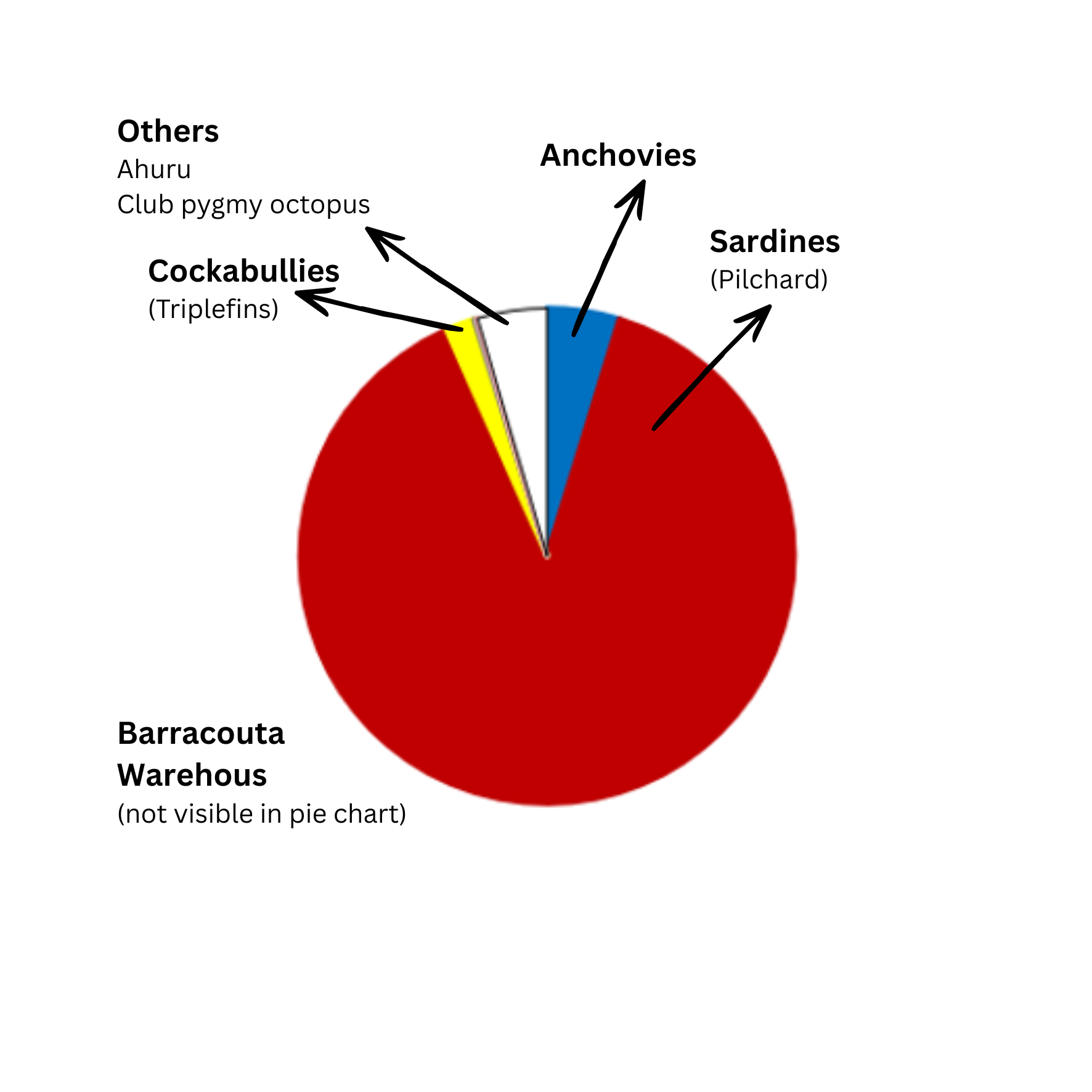
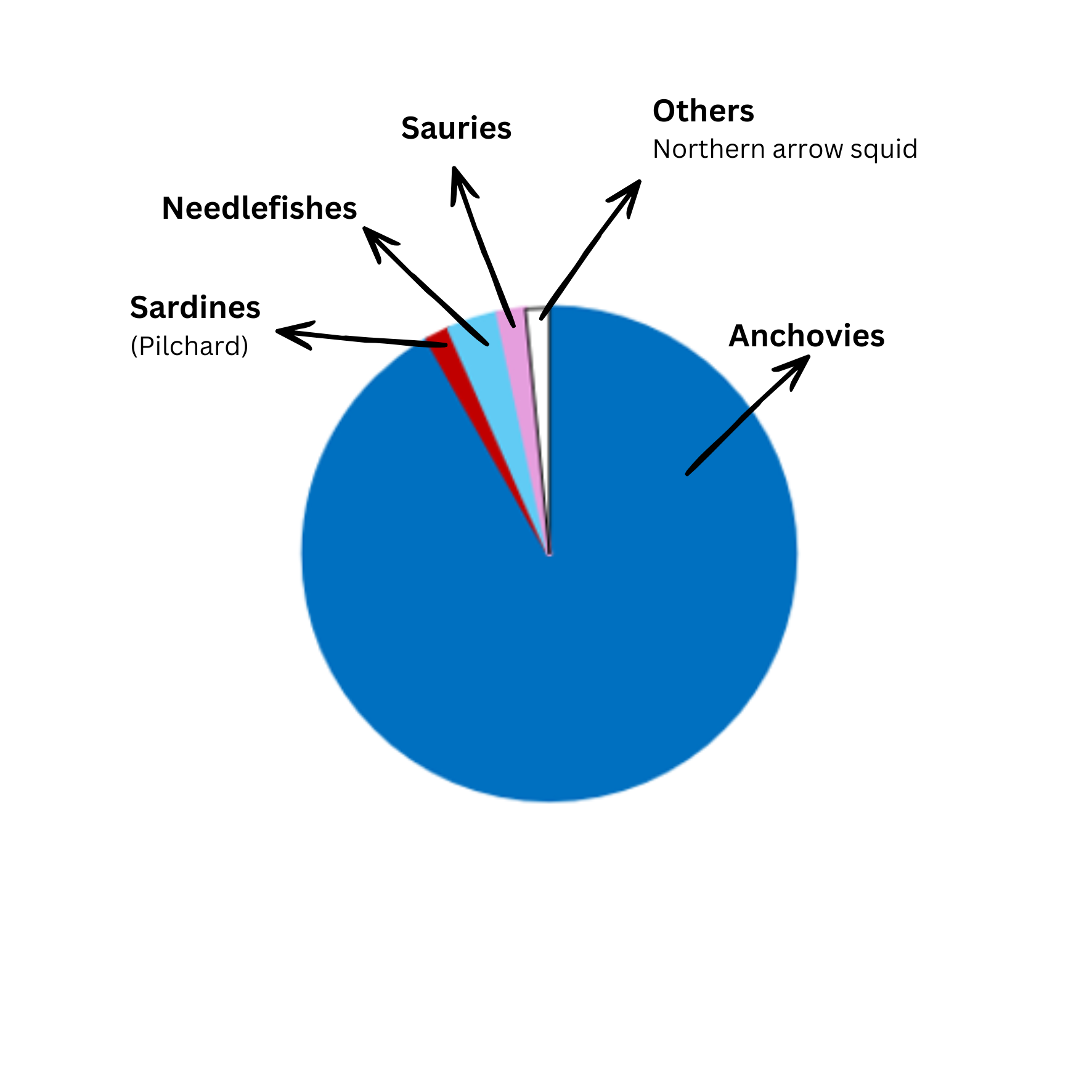
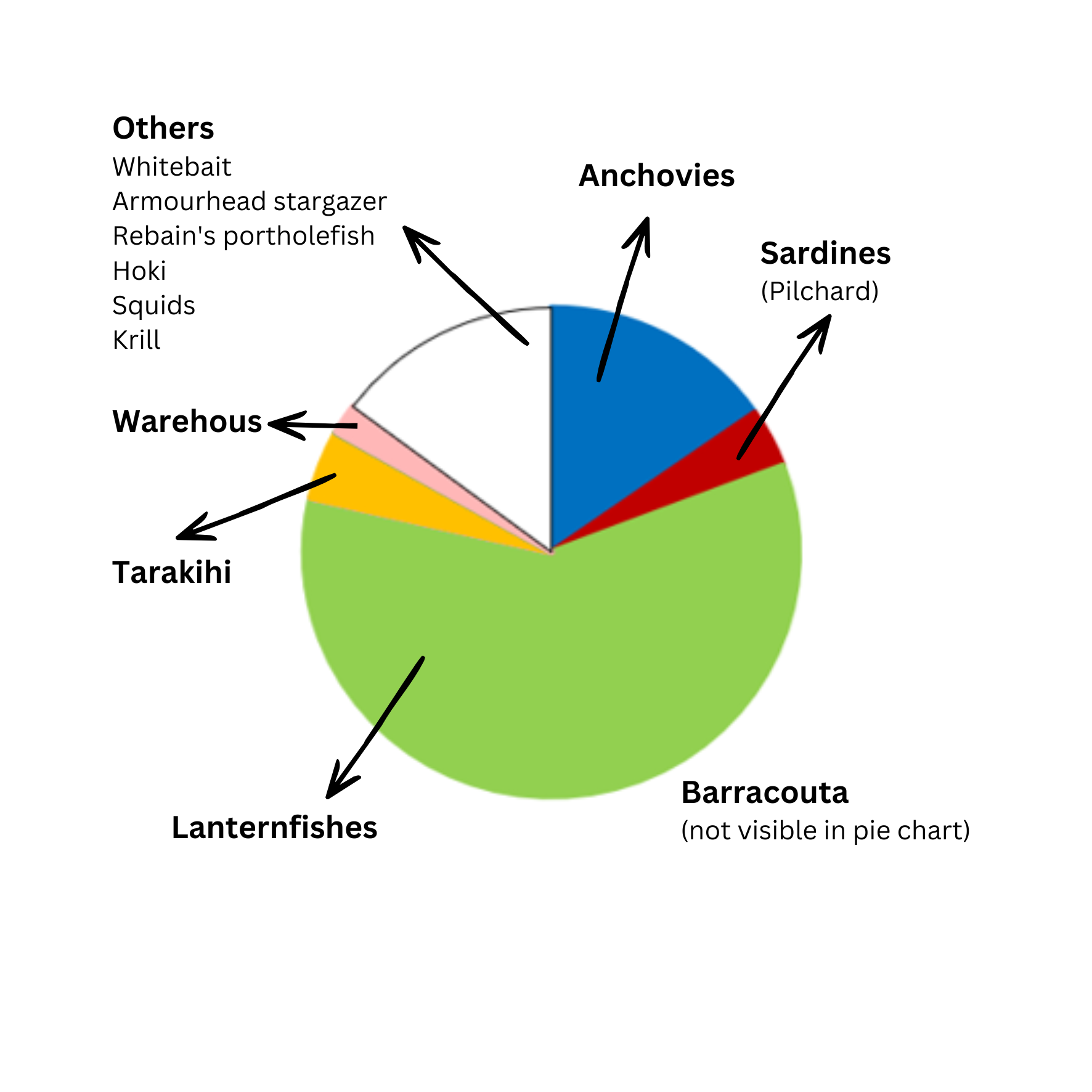
Until now, the only diet studies based on hard parts of stomach contents of kororā was from south of Banks Peninsula while elsewhere kororā diet is unknown. Some of our spring results were no surprise, e.g., pilchard and anchovies were important in the North Island diet samples. However, the variety of species from the Cape Sanctuary sample was a surprise, and Cockabullies and Lanternfish dominating the diet at Otago and the South Island West Coast respectively was unexpected.The fish we are particularly interested in are Anchovy, Pilchard and Sprat. Anchovy and Pilchard are warmer water species and it was not unexpected that the northern kororā were eating them (Muriwai, Mt Maunganui, Cape Sanctuary and Wellington) while Anchovies were found in the South Island West Coast sample. Sprat was only found in the latter and the Allans Beach (Otago Peninsula) samples (and as a bit of an outlier at Cape Sanctuary but it was not important prey). If climate change results in the warming of the ocean, we expect Anchovy and Pilchard to appear in the diet of southern kororā, and Sprat becoming less important as it migrates south to cooler waters.The Muriwai sample might be giving us a glimpse into the future for the northern kororā with Needlefish and Saury present in the diet. Needlefish have only been recorded in the Kermadec Islands and like Anchovies and Pilchards may be migrating south with the warming of the ocean and might be recorded in the kororā diet in the future. Saury is closely related to Needlefish and found all over New Zealand and may also become more important in kororā diet in the future..Muriwai
West Coast
Moturiki
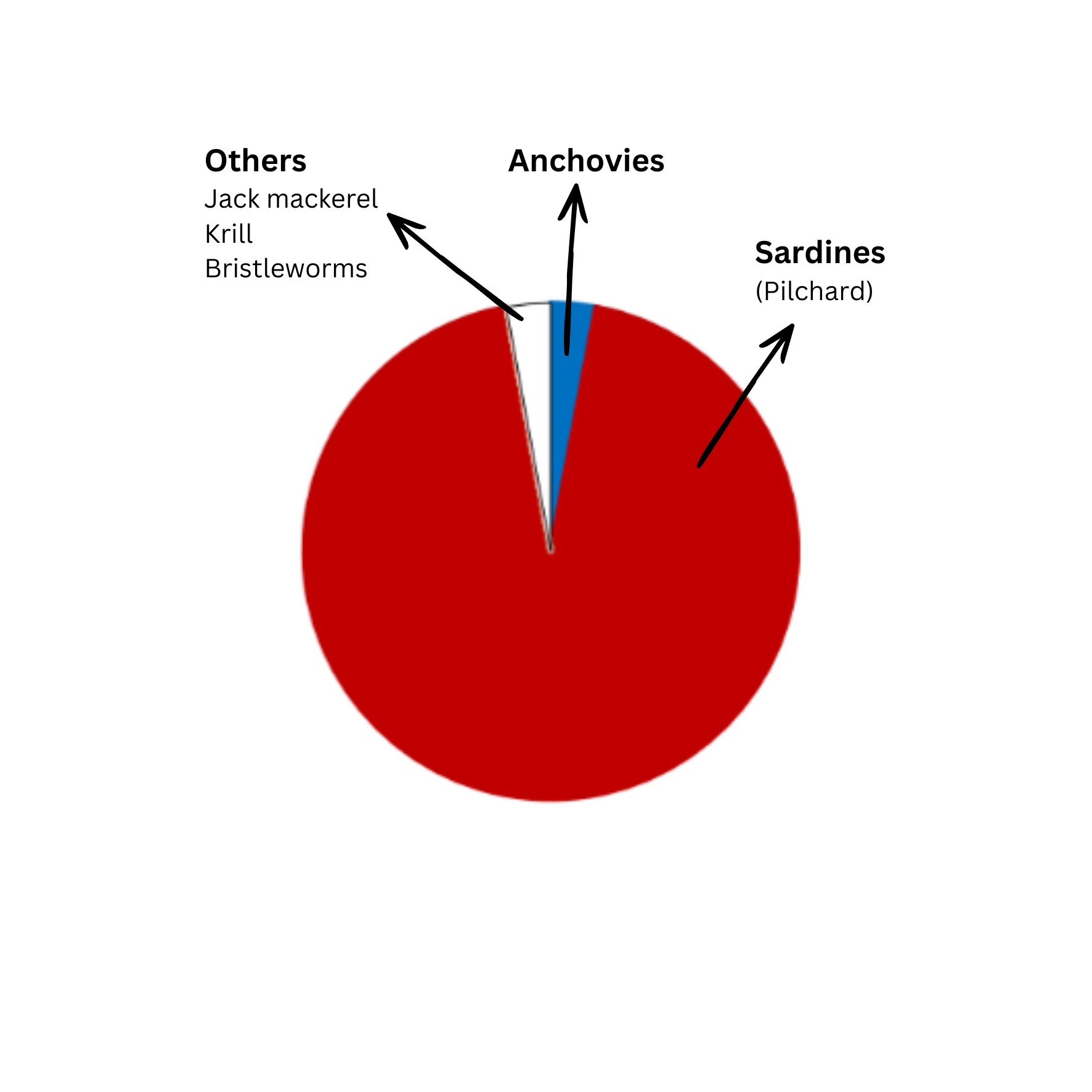
Cape Sanctuary
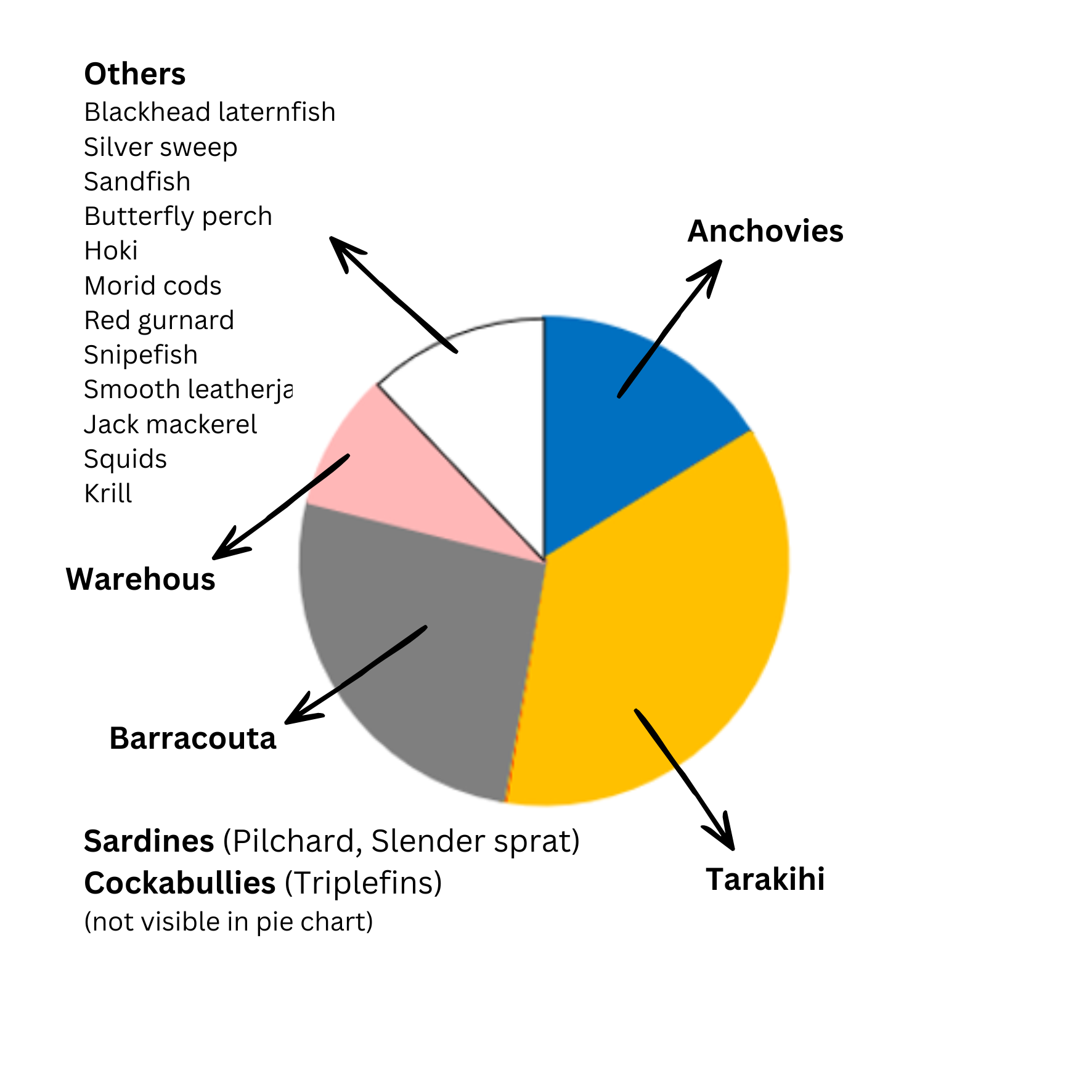
Allans Beach
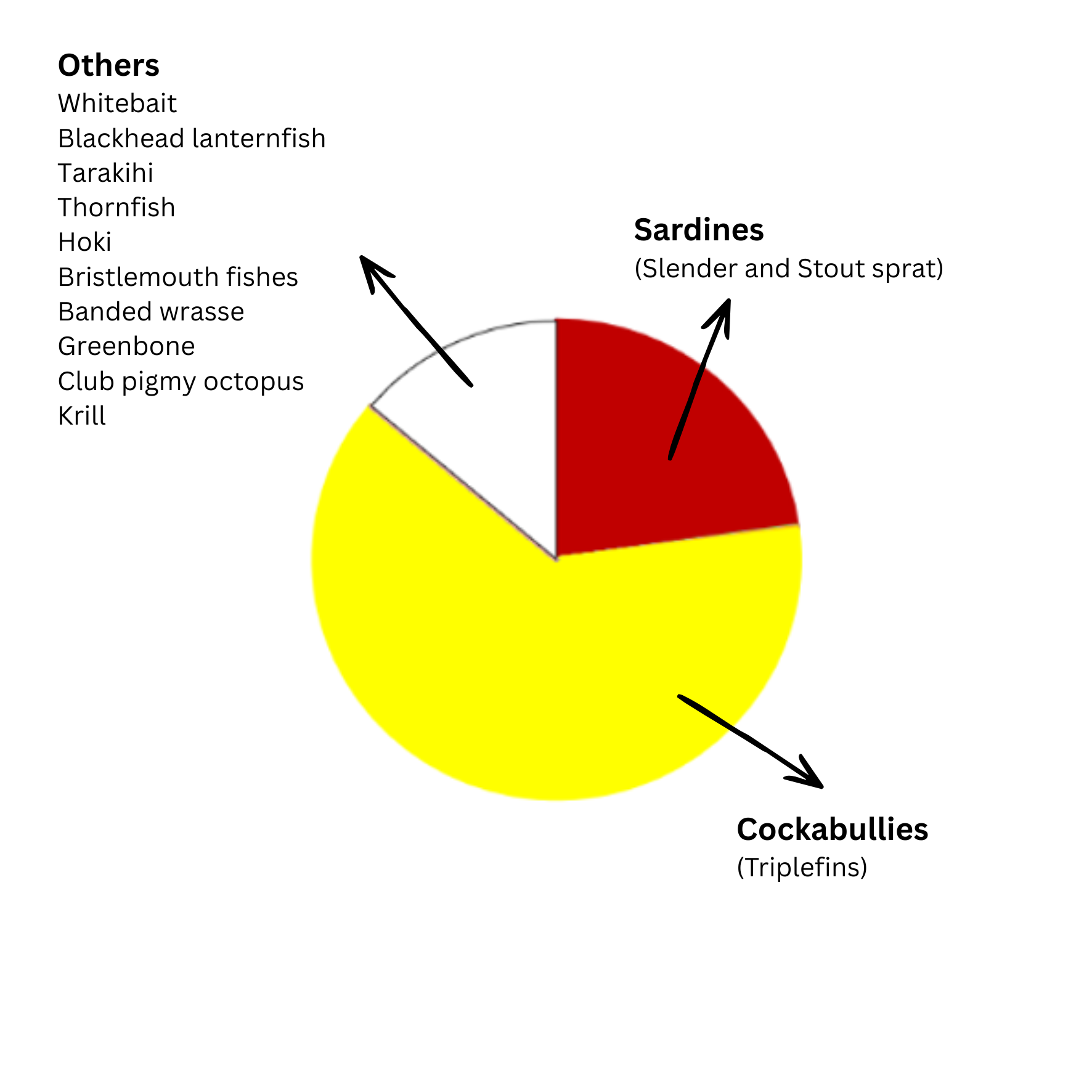
Wellington