

Penguin Rescue
If you find a penguin on the beach, out in the open during the daytime or struggling in shallow water, it is likely sick, injured or starving and needs help.
Highly Pathogenic Avian Influenza (HPAI) - H5 Bird Flu
HPAI has been recorded in New Zealand. Please be alert and keep your distance from any sick or deceased birds. Keep your pets away too.
If you observe three or more sick or dying birds, please do not touch and report to Ministry for Primary Industries (MPI) Biosecurity Pest & Disease Hotline Immediately: 0800 80 99 66.
Signs of H5 Bird Flu
The most obvious sign of bird flu is sudden death in several birds. Other signs in birds can include:
weakness and trembling
paralysis
breathing difficulties
lack of coordination
blindness
diarrhoea
For further information on Avian Influenza: Visit the MPI’s Website: Don’t let bird flu take flight | NZ Government
Found a Sick, Injured or Deceased Penguin?
Is the penguin sick/injured, or deceased?
Follow the applicable steps below.
Due to the detection of HPAI being present in Aotearoa, it is very important that you do not touch the bird unless you have been advised by MPI, DOC or an experienced Wildlife Rehabilitator.
SICK OR INJURED PENGUINS
Step 1: For injured or sick penguins - contact your nearest wildlife rehabilitation centre-see the list on the WRENNZ website and also notify the DOC emergency hotline 0800 DOC HOT (0800 362 468).
If no response from your local wildlife rehabilitation centre or DOC — contact your nearest vet clinic for advice.
Step 2: If you suspect the penguin has been attacked by a dog, please fill in this form.
Note: If you suspect a penguin has been attacked by a dog or hit by a vehicle it’s important to report it to DOC and your local council immediately, as more penguins could be at risk.
DECEASED PENGUINS
Step 1: If the penguin is deceased, contact your local penguin community group (alternatively contact us at via email or Facebook and we can let the community group know).
Step 2: Please fill in the reporting form for dead penguins (below). However, if you think the penguin may have been attacked by a dog, please fill in this form instead.
Step 3: If possible, take a photo and location of deceased penguin and upload it to iNaturalist with comments on species, location, obvious injuries etc.
Note: If you suspect a penguin has been attacked by a dog or hit by a vehicle, it’s important to report it to DOC and your local council immediately, as more penguins could be at risk.

Credit: Melissa McLuskie
Found a Sick, Injured or Deceased Penguin?
Step 1 - For injured or sick penguins - contact your nearest wildlife rehabilitation centre-see the list on the WRENNZ website and also notify the DOC emergency hotline 0800 DOC HOT (0800 362 468).
Step 2 - if no response from your local wildlife rehabilitation centre or DOC — contact your nearest vet clinic for advice.
Step 3 - If the penguin is deceased, contact your local penguin community group (alternatively contact us at via email or Facebook and we can let the community group know). Please fill in the reporting form for dead penguins (below).
Step 4 - If possible, take a photo and location of deceased penguin and upload it to iNaturalist with comments on species, location, obvious injuries etc
Step 5 - Rescued and deceased penguins found should be checked for an ID (PIT-Tag/Microchip) and scanned with an FDX-B scanner
If you suspect a penguin has been attacked by a dog or hit by a vehicle, please report it to DOC and your local council immediately, as more penguins could be at risk.
-
Kororā are often injured by boats/jet skis, road traffic, fishing nets, fishing line/rope, rubbish, pets, predators and damaged habitat e.g. trampled burrows or landslips. They can also come ashore when they are sick &/or starving and are often exhausted & dehydrated.
Starving kororā usually wash ashore from October to March. Individuals are more likely to struggle if there is a lack of food &/or ocean/weather conditions are challenging. Young fledglings that have recently left their burrow may struggle to find food and the natural mortality rate is high. Adults that are in their annual moulting phase to replace their feathers, use a lot of energy prior to, during & after their moult and are at their most vulnerable stage.
Without rescue sick, injured or starving kororā will likely die and are at serious risk of predation & dog attacks.
-
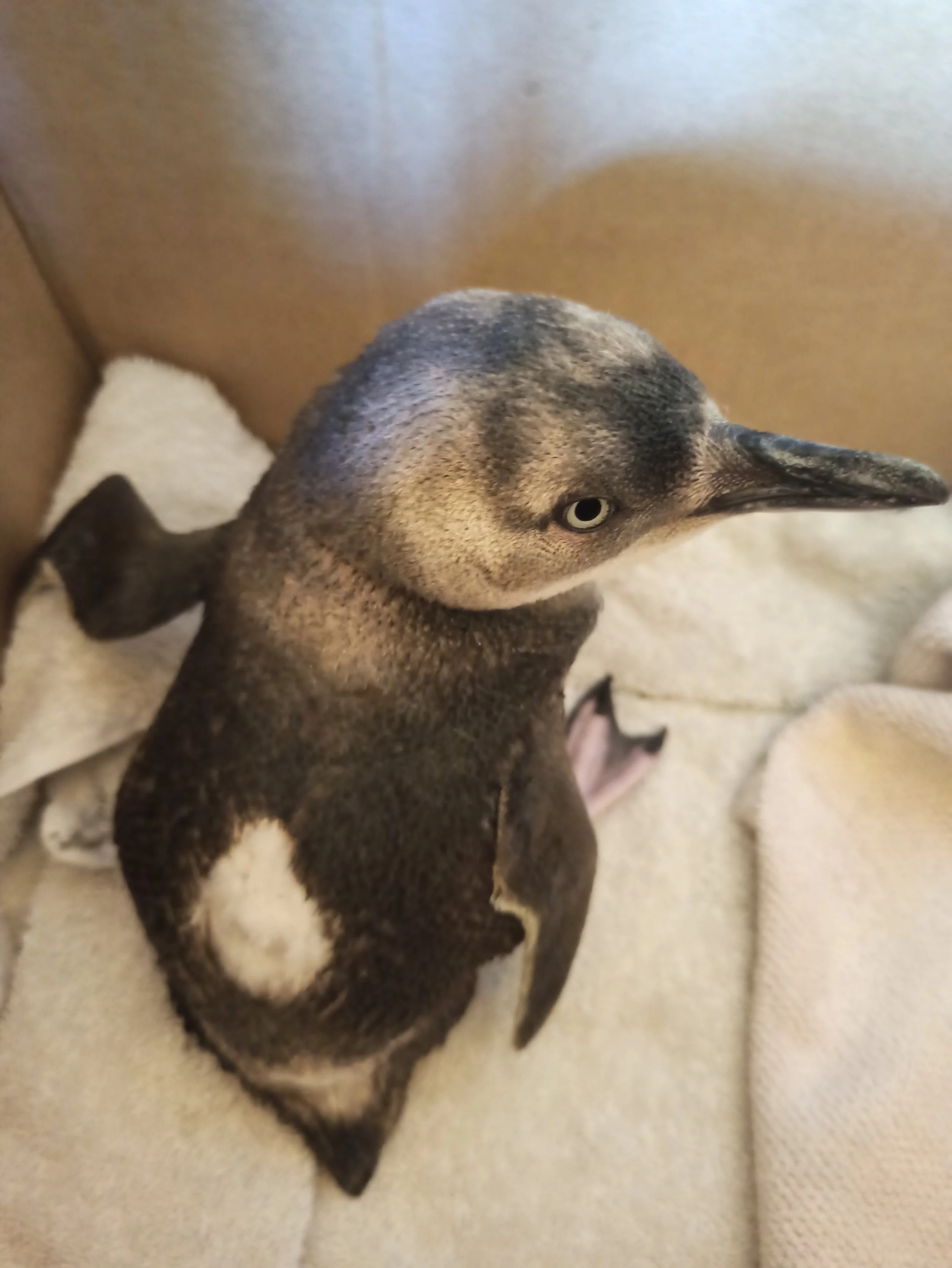
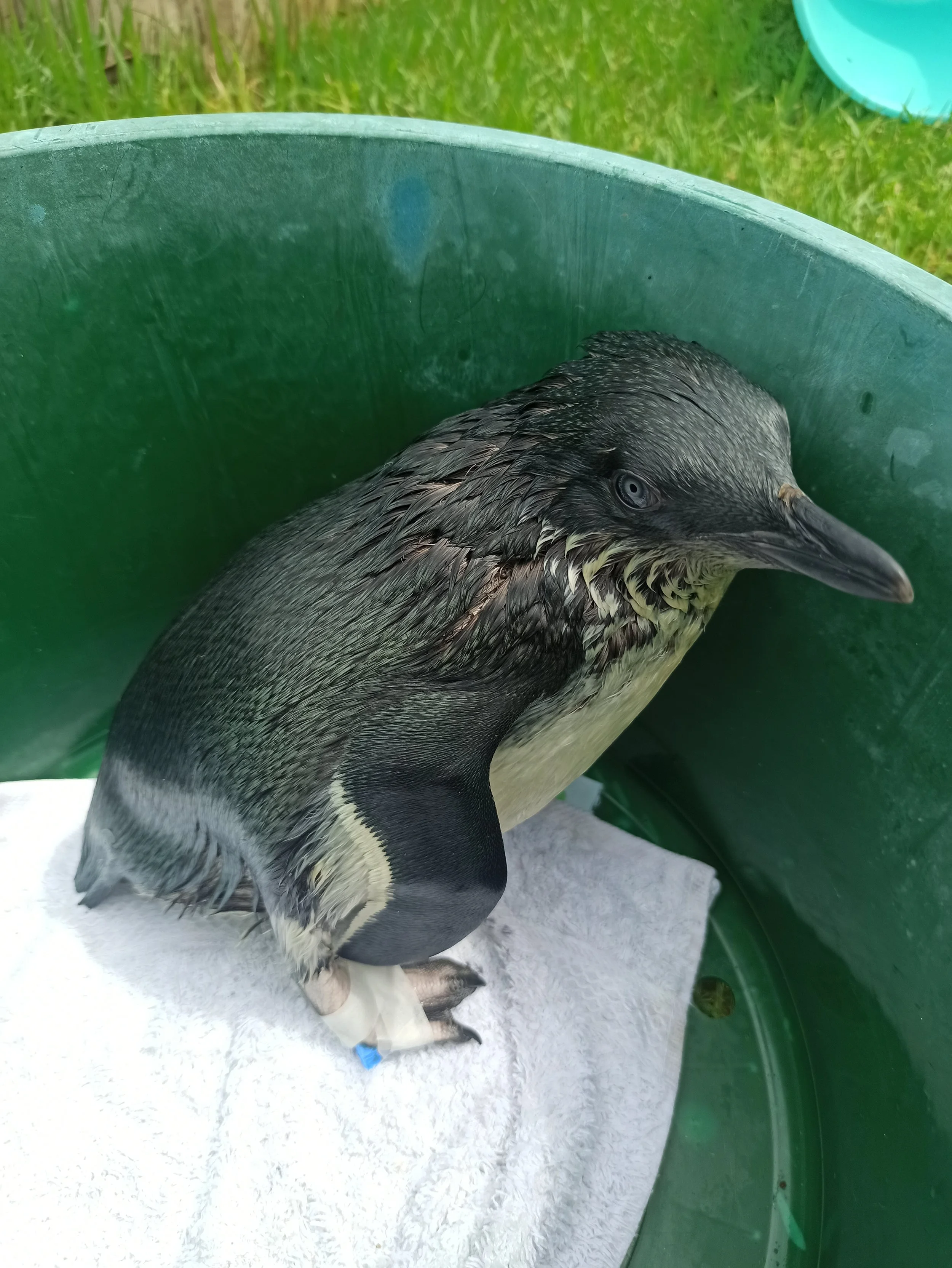
Penguins that are sick or in pain are often lethargic but may appear alert and responsive when found. They are very good at hiding that they are unwell.
It's daylight and the bird is in the open (Kororā should be out at sea or if they are on land during the day the should be undercover in a burrow or nest box)
Paddling around in shallow water and/or struggling to swim
Lying face down in sand or amongst rocks
Not wanting to move &/or difficulty standing or walking
Not trying to escape people &/or dogs
Extremely aggressive/erratic
Looking scruffy &/or brown, potentially with loose feathers
Visible Signs of Starvation
Keel bone prominent (no fat over chest)
Protruding hip bones & backbone
Legs appear long
Stomach is empty between the legs
“Big head” appearance with sunken eyes & possibly dilated pupils
Often laying down/very weak
Green/yellow watery or black tar like guano (poo)
Kororā Rescue
Contact your nearest wildlife rehabber Member Centres | Wildlife Rehabilitators Network of New Zealand or nearest penguin group (Comm Cons Page) for advice & notify 0800 DOC HOT (0800 362 468).
Keep people and dogs away.
Observe the bird from a distance to see if it & how it is moving. Photos/videos can be helpful to understand any possible injuries.
Gently wrap the bird up in a towel or soft clothing. Place in a secure box with ventilation holes that is lined with a smooth towel/clothing layer, so the bird won't slide around.
Keep in a quiet place at an ambient temperature (not too hot or cold) until transporting to a rehabber or vet for treatment.
If transporting a penguin- keep the vehicle quiet with no radio or talking & at an ambient temperature. Ensure the box doesn't slide around.
Write down details about the rescue: Date, time, location (coordinates), description of bird & any injuries (e.g. washed up on beach with wound on head), any suspected reason (e.g. caught in fishing line).
DO NOT attempt to feed the bird or put it in the water. Kororā have sharp beaks/claws and may try to bite when picked up. Their flippers are also very strong and may flap.
-
A highly contagious disease that spreads by direct contact of infected birds through saliva, nasal secretions and faeces (droppings, guano) and indirect contact with the environment e.g. water, clothing, equipment and surfaces that have been contaminated with the virus.
HPAI can infect people, although it is rare. It is important to minimise to know the symptoms of HPAI, avoid handling any penguins that may be suspicious of HPAI and always practicing strict hygiene and personal protective protocols (gloves, mask, clothing) when handling penguins.
Look out for signs of HPAI when you’re visiting the coast and if you find 3 or more penguins that are sick or dead, please do not touch and report to MPI's Biosecurity Hotline: 0800 80 99 66.
Common symptoms include:
A lack of coordination, tremors, swimming in circles
Twisted neck or other abnormal posture
Inability to stand
Diarrhoea
Difficulty breathing, coughing or sneezing
Swelling around the head, neck and eyes
Cloudiness or change in colour of the eyes
Sudden death
More information is available at Avian influenza: staying safe and alert when outdoors | NZ Government and on the DOC Website Avian influenza: Wildlife health.
Essential Information About Penguin Rescue
Credit: Melissa McLuskie
Credit: Melissa McLuskie
Why Reporting Penguin Sightings Is Important
Reporting sick, injured, starving and deceased Kororā/Little Penguins is important to learn more about colonies, the threats they are facing and how we can help protect them nationwide.
Thousands of kororā across Aotearoa have been marked with a PIT-Tag/Microchip, which has a unique number and enables individual birds to be identified. Marked individuals are part of long-term population studies that are undertaken by experienced individuals/groups and the information gained from resighting them at a later date, is very valuable towards conservation efforts. It helps enhance local/national population knowledge, as well as developing our understanding about their survival, recruitment, movements around the country, which can be used to help mitigate threats that may pose harm to colonies.
Any penguin found (alive or dead) should be reported to a local group to ensure it can be checked for a PIT-Tag/Microchip. Some penguins may also have a metal flipper band. Any marked penguins should also be reported to the DOC Wildlife Marking Office.
NZ Penguin Initiative Dead Penguin Reporting Form
Reporting dead penguins found along our coastlines can help us understand more about their distribution, population trends and identify key threats. Any dead penguins found should be reported to a local group to be checked for a PIT-Tag/Microchip. Some penguins may also have a metal flipper band, and this should also be reported to both the local penguin group and the DOC Wildlife Marking Office.
If you suspect a penguin has been attacked by a dog. Please fill in our dog attack form here: NZ Penguin Initiative Dog Attack Reporting Form