

2025/26 year
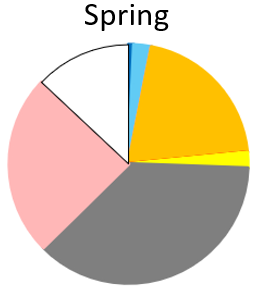
Tarakihi (orange), Barracouta (grey) and Warehous (pink) were the most important prey. Not visible in the pie chart are Anchovies (blue), Needlefishes (light blue), and cockabullies (Triplefins –yellow), Pacific saury (dark pink) and Sweeps (bright red). “Other” prey (white) included Hoki, Snipefish, Thornfish, and flounder. A non-fish prey crossed the 10% threshold for the first time: the Salpidae family (Tunicates) were represented by two genera and are included in the pie chart under “other” (white).
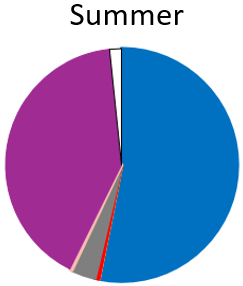
Anchovies (blue) and Gurnards (purple) were important. Also found were Silver sweep (bright red), Barracouta (dark grey), Pacific saury (pink), Tarakihi (dark yellow), Tuna (dark green) and Warehou (dark pink). “Other” prey (white) included Whitebait, Red cod, yelloweye mullet, crested flounder, some Cnidarians (Gelata) and krill.
2024/25 year
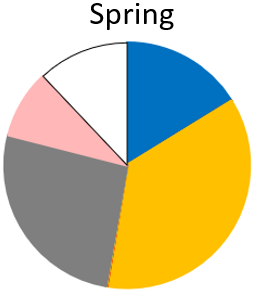
Anchovies (blue), Pilchard and Slender sprat (red), Moki and Tarakihi (dark yellow), Barracouta (grey), Warehous (Blue warehou (pink) were recorded. The “other” fish (white) were Blackhead lanternfish, Silver sweep, Sandfish, Butterfly perch, Triplefins, Hoki, morid cods, Red gurnard, Snipefish, lefteye flatfishes, Smooth leatherjacket, and Jack mackerel. Non-fish prey identified were squids and krill. Of note is that Slender sprat was recorded, a species found in samples further south because it is a cooler water species.
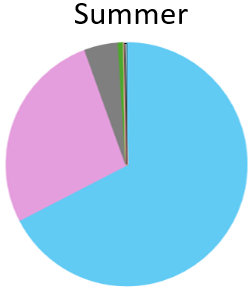
Needlefishes (light blue) were important, as well as Sauries (pink), Barracouta (grey) and Tuna (green). The “other” species (white) were Red scorpionfish, Jack mackerel, and Blue warehou. The non-fish prey detected was Northern arrow squid.

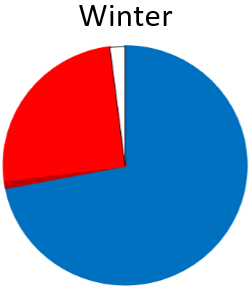
Anchovies (blue) and Sweeps (bright red) were the most important. Some Pilchard (darker red) was also recorded. The “other” species (white) were Snipefish and Kahawai. Non-fish species were krill and Northern arrow squid.